
One day closer to the first day of school… Below, we’ve compiled our favorite 10 language arts activities we’ve featured over the summer (as well as our Summer Reading Lists) to make sure your child gets in gear ahead of
99 Days of Summer Learning – Have You Signed Up Yet?
Have you heard that 2/3 of the 9th grade achievement gap is due to Summer Slide? This Summer, we’re helping parents make sure their kids’ mind muscles stay strong and active by emailing a learning activity every day between Memorial
References We Used As We Developed Kidzmet

Genesis of Kidzmet While we started building the current version of Kidzmet in late 2010, the inspiration for the idea actually came from Jen Lilienstein’s undergraduate senior thesis in 1994. Under the direction of Dr. Francesca Cancian at UCI, Jen
10 Tips When Helping Your Children to Choose Their Science Fair Projects

Science fair season has become increasingly more competitive. This is because the stakes at these events are no longer limited to ribbons and plaques. There are big money rewards to be won and chances to impress college entrance boards as
Make It Your Mission! Part 3
Plan a date, time and place to have a gathering to talk to other “like minded people” in your community about your personal mission. Use your visual/spatial, interpersonal and/or verbal smarts to create one or more of the following to
Poetry Puzzle
Adapted with permission from Chicago Park District’s “Once Upon a Day Camp” Guide Read selections from an anthology like The Rattle Bag and compare the word choices of the authors from different eras. How has the English language changed over time? What
Limerick Epitaphs
Talk to your child about what an epitaph is (a brief poem or other writing in praise of a someone who has passed away so that others could get a sense of who the person was). Then read some limericks
Shape Poetry
A shape poem is one that describes an object and is written in the shape of the object. To get your child’s creative juices flowing, you can look at examples of shape poetry here. Next, have your child pick an object
On Cyber Bullying as a Social Phenomenon
by Dr. Tali Shenfield, Clinical Psychologist Our society has changed a great deal over the last fifty years. Technology has increased our ability to communicate with each other. The world has gone wireless and the average human being today carries
Kine-Simon
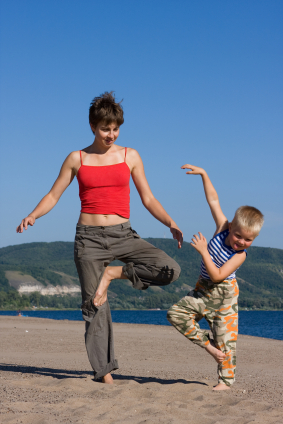
Do you remember the old My Simon game that was a family favorite back when we were kids? (Need a memory jog? Play the video at the bottom of this post.) Update that concept with Kine-Simon for some active family